Living Art
Since the early 1800s, Japanese breeders have cultivated koi into swimming masterpieces — each fish a unique expression of color, pattern, and grace.
Nishiki — brocade. The word itself evokes woven silk, layered colors, and the patience of artisans.
Born from Mountain Streams
Koi descend from common carp, first bred for color in the rice terraces of Niigata, Japan. What began as a farmer's curiosity became a national art form — and eventually a global passion.
A Language of Pattern
Each variety carries its own aesthetic vocabulary. The crisp edge of a Kohaku's crimson. The inky depth of a Showa's sumi. Judges and collectors read these patterns like poetry — seeking balance, intensity, and harmony.
Living for Decades
With proper care, koi can live 25 to 35 years — some far longer. They grow to know their keepers, rising to the surface at the sound of familiar footsteps. They are companions, not just ornaments.
Nishikigoi by the Numbers
A living art form with deep roots and a worldwide community
Celebrated Varieties
Each variety is a distinct expression of centuries of selective breeding — a living testament to patience and artistry.
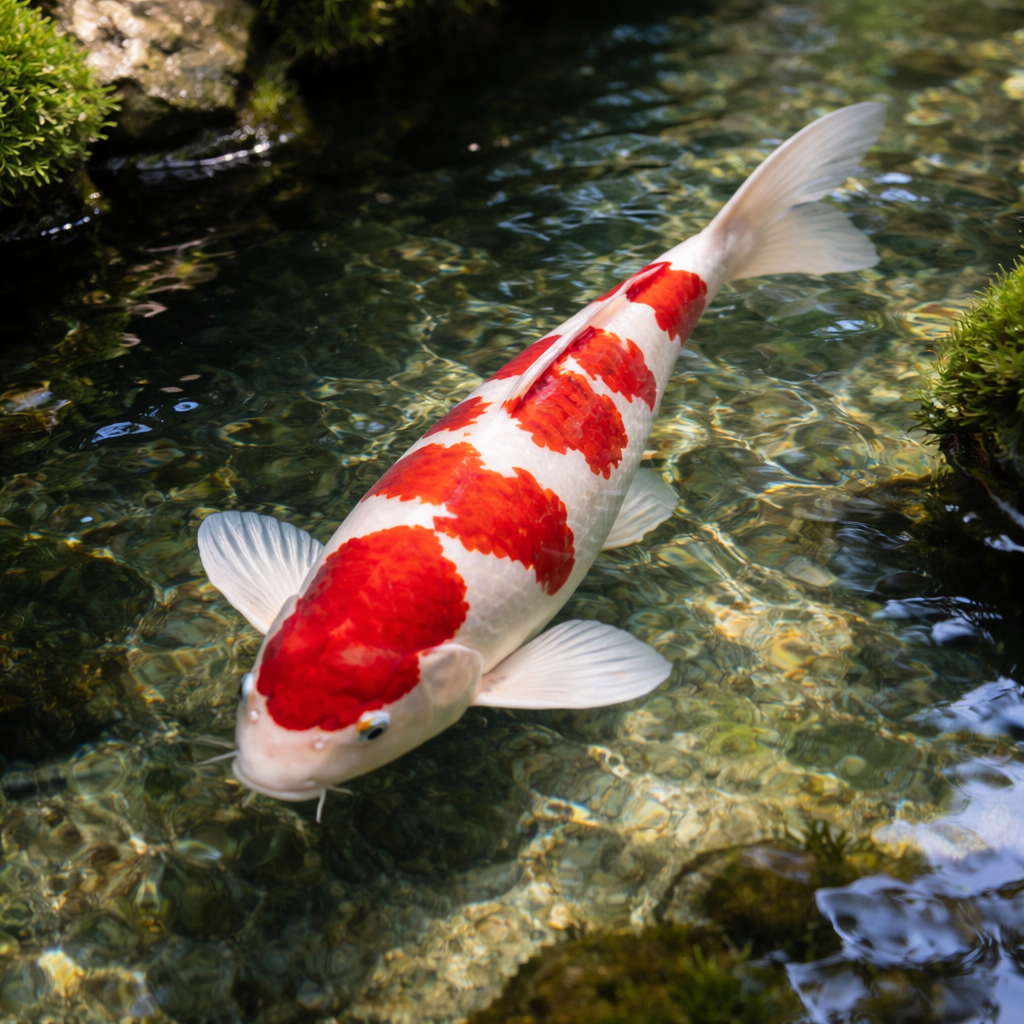
Kohaku
紅白
The quintessential koi. A Kohaku carries a pure white body adorned with deep crimson patterns — a living canvas of simplicity and grace.
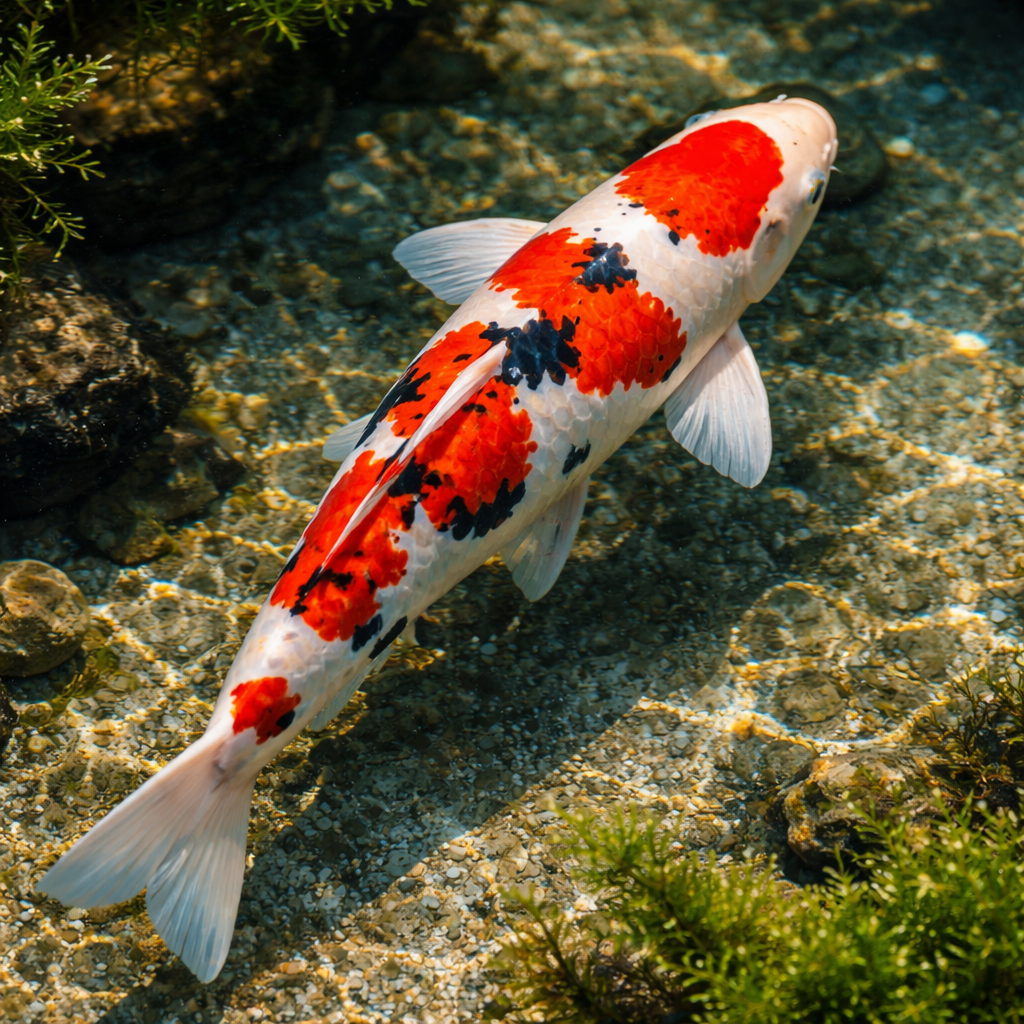
Taisho Sanke
大正三色
Three colors in harmony. The Sanke layers black accents over the Kohaku's red and white, adding depth and visual rhythm to each fish like brushstrokes on porcelain.
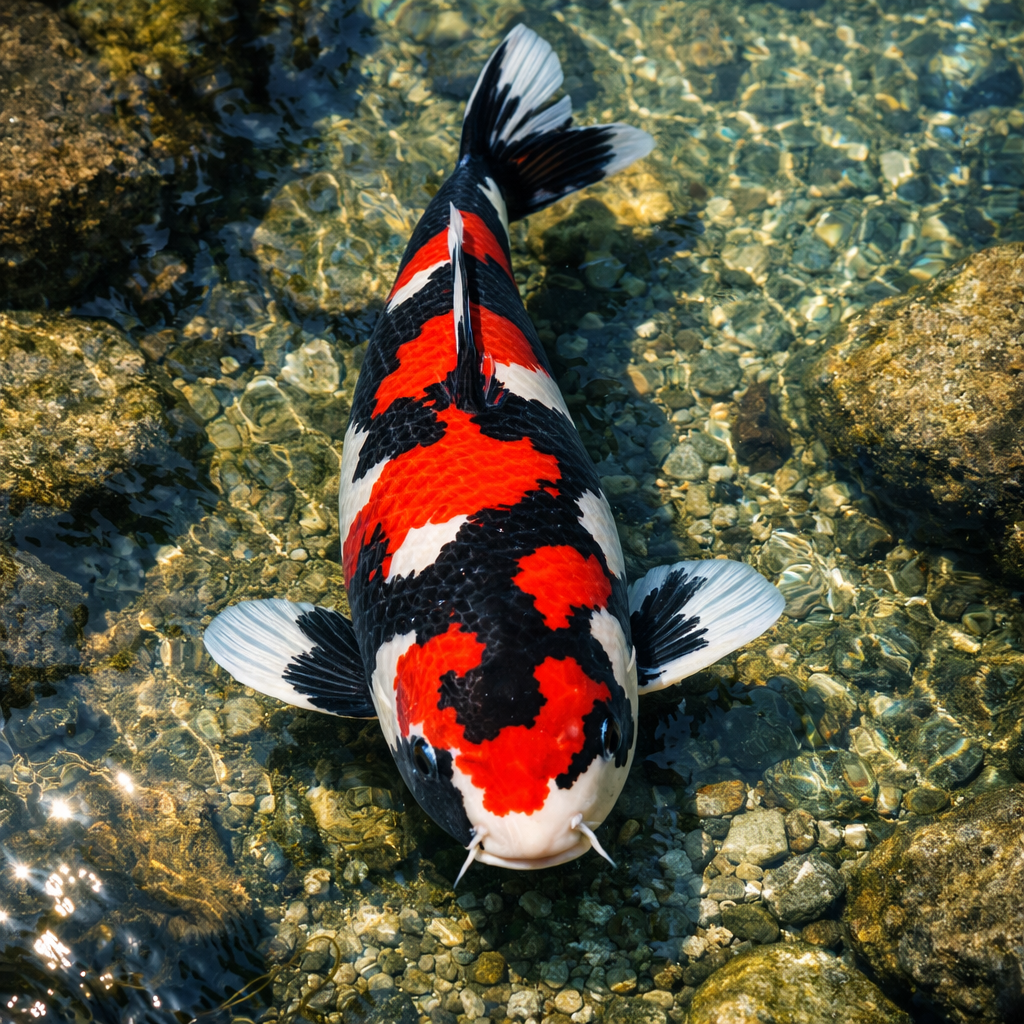
Showa Sanshoku
昭和三色
Bold and dramatic. Unlike the Sanke, the Showa begins with a black base, wrapped in sweeping fields of red and white. It carries the presence of sumi ink painting come to life.
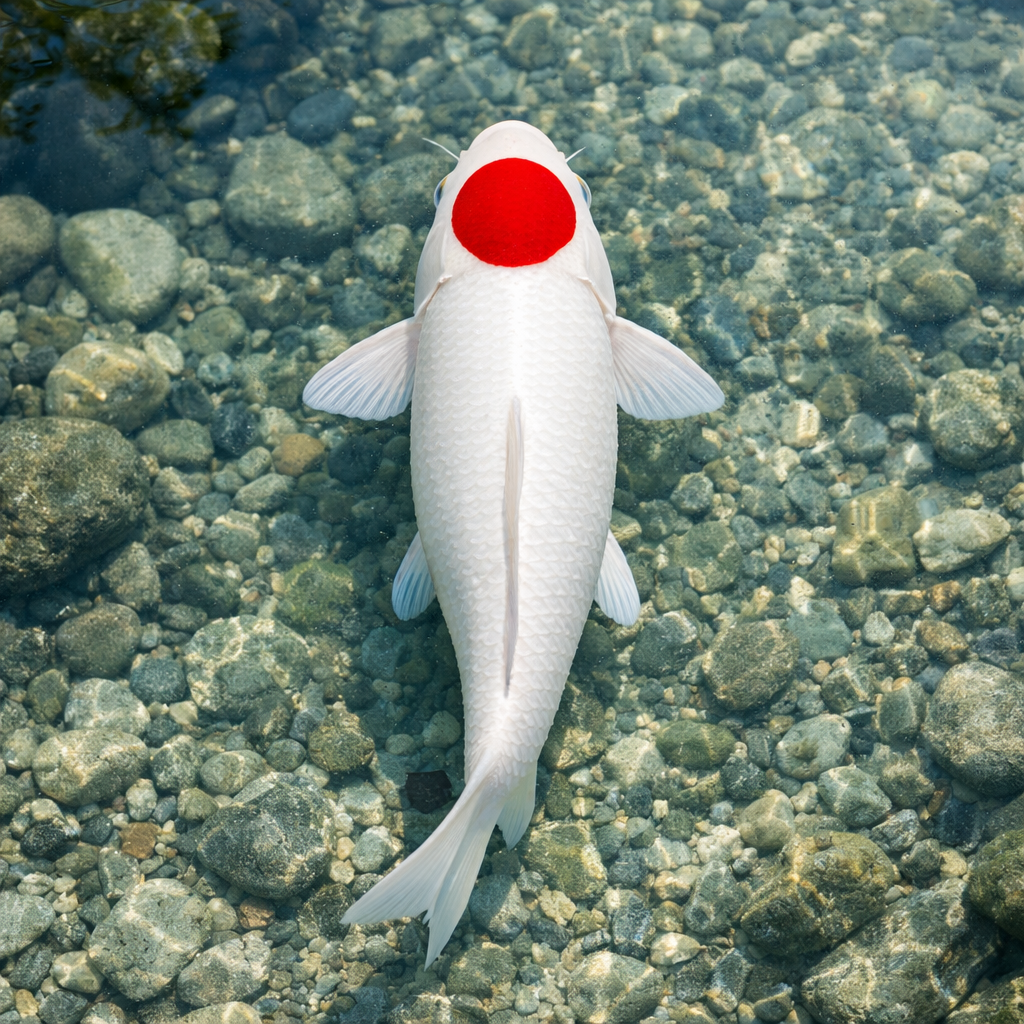
Tancho
丹頂
Named after the Japanese crane, the Tancho bears a single crimson circle on its head — a mark of elegance that echoes the rising sun. Prized for its striking minimalism.
A Living History
From humble food fish to living art, the story of nishikigoi spans millennia
Carp Arrive in Japan
Common carp (Cyprinus carpio) are introduced to Japan from China, initially bred as a reliable food source in inland mountain regions.
The ancestral stock from which all modern nishikigoi would eventually descend arrives in Japanese waters.
Color Mutations in Niigata
Rice farmers in the mountainous Niigata prefecture notice natural color mutations in their food carp. Instead of culling them, they begin selectively breeding the most colorful specimens.
The birth of nishikigoi as a hobby. Niigata remains the spiritual homeland of koi breeding to this day.
First True Kohaku Bred
Through careful selective breeding, the first recognizable Kohaku with distinct red markings on a white body is established as a variety.
Kohaku becomes the foundation variety, considered the most important koi type. The saying goes: "koi keeping begins and ends with Kohaku."
Tokyo Taisho Exhibition
Niigata breeders display their finest colored carp at the annual exhibition in Tokyo. The emperor receives a gift of koi, bringing national attention to the hobby.
Nishikigoi transition from regional curiosity to nationally recognized art form. The imperial endorsement elevates their status enormously.
Showa Sanshoku Created
The Showa variety is developed by Jukichi Hoshino, completing the Gosanke (Big Three) alongside Kohaku and Taisho Sanke.
With all three Gosanke varieties established, the foundation of modern koi appreciation and judging standards is complete.
Post-War Revival
After World War II, the koi hobby experiences a renaissance in Japan. Improvements in transportation allow breeders to ship fish across the country, and new varieties are rapidly developed.
Modern koi keeping infrastructure develops, including filtration technology, professional breeding facilities, and organized shows.
Koi Go Worldwide
International air freight makes it possible to export living koi globally. The hobby spreads rapidly to the UK, USA, Israel, South Africa, and across Europe and Asia.
Nishikigoi transform from a Japanese art form into an international hobby with millions of enthusiasts worldwide.
All Japan Koi Show Established
The All Japan Nishikigoi Show is formally organized, becoming the most prestigious koi competition in the world. It sets standards adopted globally.
Standardized judging criteria unify the hobby worldwide and drive breeders toward ever-higher quality.
First Million-Dollar Koi
A 101cm Kohaku named S Legend, bred by Sakai Fish Farm, sells for 203 million yen (approximately $1.8 million) at auction, setting a world record.
Demonstrates that the finest nishikigoi are valued as living art, comparable to fine paintings or sculptures.
A Global Community
Koi keeping thrives in over 50 countries. Advances in genetics, nutrition, filtration, and pond technology continue to push the boundaries of what is possible in nishikigoi breeding.
From humble food fish to living art worth millions, nishikigoi represent one of the most remarkable examples of selective breeding in history.
Pond & Garden
Where Stillness
Meets Life
A koi pond is not merely water in a hole — it is a designed ecosystem. The best ponds balance clarity, depth, and flow to create an environment where koi thrive and viewers find peace.
From traditional Japanese garden ponds with stone bridges and lanterns to modern architectural water features — the possibilities are as varied as the koi themselves.
From the Pondside
Stories from koi keepers around the world
“The moment you see your first koi from a top Japanese breeder, you understand why people travel across the world for these fish. The depth of color, the quality of skin — it is artistry in a living form.”
Immerse Yourself
Beauty in Every Scale
Explore our curated gallery of koi photography — capturing the movement, color, and quiet drama of these extraordinary fish.